Why Your Lawn Has Yellow Patches in Spring (and How to Fix Them)
You walk out on a mild March morning and there it is: a scattering of yellow patches across a lawn that looked perfectly respectable in October. Before you reach for a box of feed, slow down. Yellow turf in spring has half a dozen common causes, and they need very different treatments. Feed a waterlogged lawn and you will make things worse. Water a patch caused by disease and you may spread it. Work out which problem you are looking at first.
Waterlogging and compaction
If the yellow patches sit in hollows, along a fence line, or anywhere the ground squelches underfoot, drainage is your culprit. Roots drown in saturated soil and the plant yellows from the base upwards. Compacted ground makes it worse, because water sits on the surface instead of filtering away.
Fix it by waiting until the soil is workable — crumbly rather than sticky — then aerating. Push a garden fork in to about 10–15cm, wiggle it, and work across the area at roughly 15cm intervals. On heavy clay, hire a hollow-tine aerator and brush a sandy topdressing into the holes. Keep off the lawn while it is wet, and redirect any downpipe that empties onto the turf.
Dog urine
Classic dog patches are straw-coloured in the middle with a ring of dark green grass around them. Urine delivers a heavy dose of nitrogen in one spot: too much for the grass to cope with, so it scorches. The ring is where a lighter dose has fed the grass instead.
- Flush the area with water as soon as you spot it — a full watering can poured over the patch dilutes the salts.
- Train the dog to use a gravel or bark area, or take it to the same corner of the garden each time.
- Keep the lawn watered in dry spells so urine is diluted naturally.
Resist the urge to re-seed straight away. Give it a few weeks of watering and light feeding; many patches fill in on their own.
A dull mower blade
This one catches people out because the damage is invisible from standing height. A blunt blade tears grass rather than cutting it, leaving frayed tips that dry out and turn pale yellow or brown. The lawn looks bleached, and the tips feel ragged if you rub them between your fingers.
Fix: sharpen the blade, or have it sharpened, and check it again after roughly every ten to twelve hours of mowing. Then set the cut higher for the first few cuts of the year, taking off no more than a third of the leaf at a time. Scalping a lawn in March removes the very leaves it needs to build strength.
Cold soil and late frost
Grass starts growing when the soil warms, not when the calendar says spring. A cold snap after a mild spell can knock back new growth and leave pale, yellowed tips. Shallow-rooted turf on thin soil suffers most.
Mostly, the fix is patience. Raise the cutting height, avoid walking on frosted grass because it snaps the blades, and hold off feeding until you can see steady growth and the forecast looks settled. Once the grass is growing, a light feed does far more good than an early heavy one.
Feeding mistakes
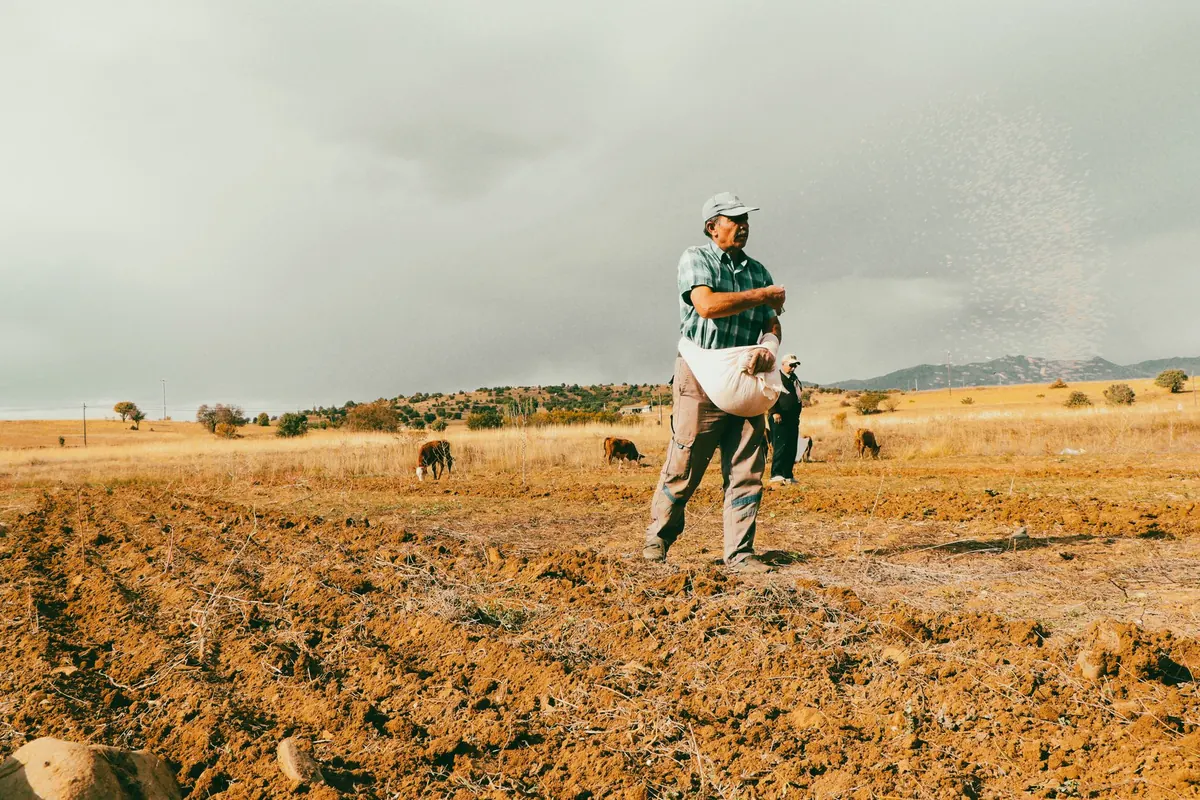
Too little feed, too much, or an uneven application will all show up as yellowing. Granules dumped in one spot burn the grass beneath them, and a badly used spreader leaves stripes of pale and dark turf. Feeding before the roots are active is simply wasted.
- Wait for steady growth and a settled forecast.
- Choose a spring or summer lawn feed and read the application rate on the packet.
- Set the spreader to half that rate and go over the lawn twice, in opposite directions, for even coverage.
- Water it in if no rain follows within a day or two.
If you have fed heavily and the patches are crisp and brown at the edges, you have probably overdone it. Water thoroughly to wash the salts down and then leave the lawn alone.
Fungal disease
Red thread shows as pinkish, thread-like strands among yellowing grass, usually on hungry lawns in damp, mild weather. Fusarium appears as orange-brown patches that spread in rings, often after humid nights. Both thrive where air cannot move and dew sits on the leaf.
Brush dew off in the morning, keep the lawn fed sensibly rather than starved, avoid watering in the evening, and improve airflow by trimming back overhanging shrubs. Scarify to remove thatch so water and air reach the soil. If you plan to use a fungicide, read the label carefully and ask a qualified supplier or lawn care professional for advice — it is not always the right first step.
Thatch, moss and shade
A spongy layer of thatch and a carpet of moss both point to the same underlying issues: compaction, shade, poor drainage or mowing too short. Moss yellows and dies back in spring, leaving pale patches behind it.
Scarify in spring or early autumn to pull out dead material, aerate, then overseed bare areas with a mix suited to shade if that is the problem. Raise the mowing height and let more light in. Be realistic about deep shade: if grass will not grow there, a border or gravel path is less work and looks better.
Your spring recovery plan
Work through these in order and most lawns will come back well before summer:
- Walk the lawn and note where the patches are and what they look like.
- Deal with drainage and compaction first — everything else works better afterwards.
- Sharpen the mower and raise the cutting height.
- Feed lightly once growth is steady, and apply it evenly.
- Overseed bare patches and keep them damp until the new grass establishes.
- Adjust watering and the dog's habits, and sort out the shade.
Most spring yellowing clears within a few weeks once the cause has been dealt with. Take a photo now and another in a month, then compare — the improvement is often easier to see in pictures than from the kitchen window.
Photo: Diogo Cacito / Pexels
You Might Also Like
A season-by-season plan for new gardeners: prepare one border properly, choose reliable plants, and do only the jobs that actually keep it looking good.
Leaf mould, compost and bark chips each suit different borders. Here's how they compare on cost, looks and soil life, and which to use where.