A Pollinator-Friendly Window Box: What to Plant and How to Keep It Going
Most of us do not have room for a meadow. What we have is a sill, a balcony rail, a ledge that catches the sun from midday. That is enough. A well-planted window box pulls in bees, hoverflies and butterflies from further away than you would expect, and because it sits near eye level you actually get to watch the traffic. Treat it as a small garden rather than a one-off summer display, and it will keep producing nectar into autumn.
Choose the box before you choose the plants
Size is the biggest factor in how easy a window box is to live with. A trough of 60–90cm with 25cm of depth holds moisture far better than a row of small pots, and it gives lavender, salvia and oregano enough root run to settle in properly. Go to 30cm deep and almost anything on the list below will thrive.
Drainage holes are essential. Cover them with a piece of broken pot or a square of mesh so the compost stays put, then check the box sits level. Wet compost is heavy, so make sure the brackets are fixed properly rather than just hooked over a rail, and secure the box against summer squalls.
Aspect decides what will succeed. Most pollinator favourites want sun, so a south- or west-facing spot with six hours or more is ideal. A north-facing sill still works — hardy fuchsia, alyssum and most hardy geraniums cope with half shade.
Compost: the difference between thriving and surviving
Peat-free multipurpose is the sensible base, but straight from the bag it dries out fast and slumps by August. Improve it with roughly three parts compost to one part garden compost or well-rotted leaf mould, plus a couple of handfuls of grit or perlite per bucket to keep it open. Mix in a slow-release fertiliser as you plant.
Leave a 2–3cm gap between the compost surface and the rim. That small reservoir makes watering quicker and stops it spilling over the edge. A mulch of gravel or slate chips slows evaporation and discourages cats and squirrels from digging. Garden soil on its own is a poor choice in a container: it compacts, drains badly and brings weeds.
A planting plan that keeps the nectar coming
Aim for three layers: upright plants for height, long-flowering fillers in the middle, and something trailing over the front. Mix flower shapes as well as colours — flat daisy-like blooms, tubes and tiny clusters each suit different insects. Blues, purples, yellows and whites are easiest for pollinators to find.
Planting it up
- Stand the plants in water for ten minutes while you get everything ready, then half-fill the box with your compost mix.
- Set the tallest plants at the back, or in the centre if the box will be seen from both sides, with fillers in the middle and trailers near the front.
- Take them out of their pots, tease out any circling roots, and firm them in so each rootball sits at the same level it was in the pot.
- Fill the gaps, press the compost down gently, and water until it runs out of the drainage holes.
- Finish with a gravel mulch, then water again the next day to settle everything in.
Plants worth trying in a sunny box
- Upright: Salvia nemorosa 'Caradonna', lavender 'Hidcote', oregano or marjoram, compact penstemons, wallflower Erysimum 'Bowles's Mauve'.
- Fillers: sweet alyssum, Scabiosa 'Butterfly Blue', single-flowered dahlias, calendula, dwarf cosmos.
- Trailing: Erigeron karvinskianus, trailing verbena, prostrate thyme, trailing rosemary, nasturtium.
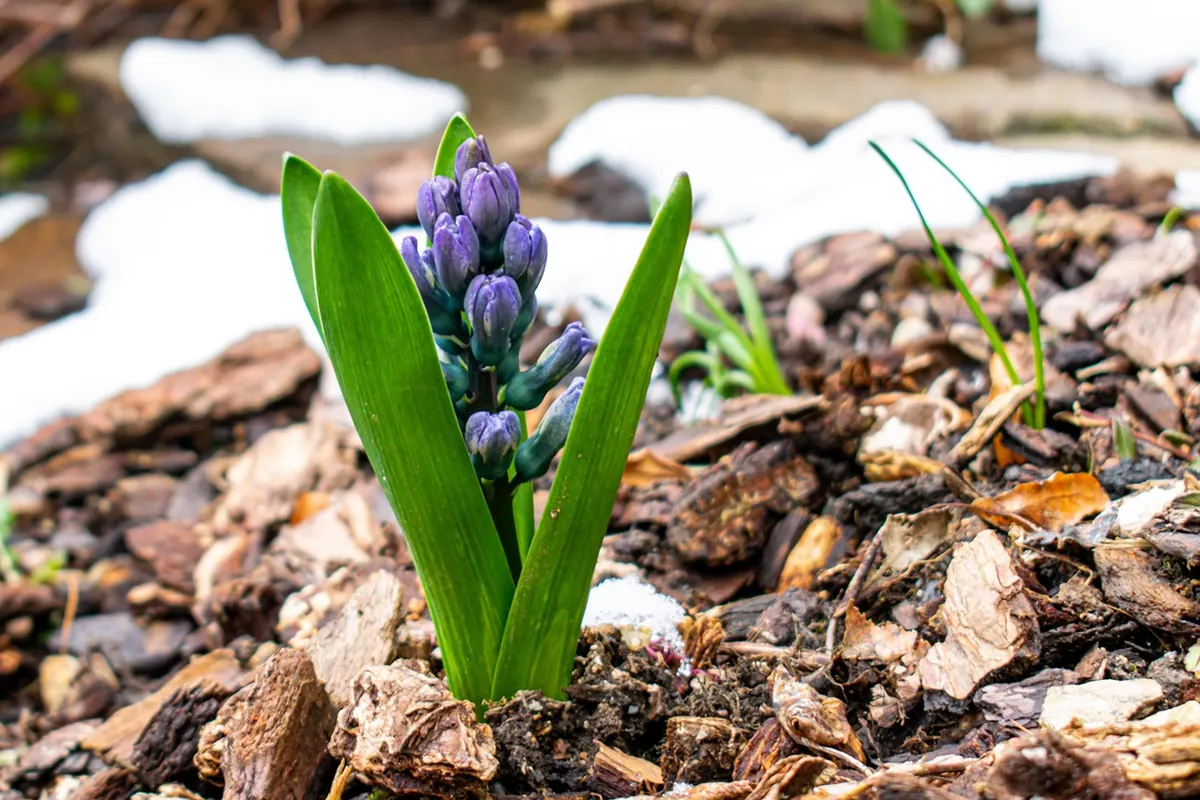
- Spring colour: plant crocus, grape hyacinth and dwarf narcissus in autumn for early nectar before the summer plants get going.
One rule saves a lot of disappointment: skip double flowers. Their densely packed petals leave little or no nectar and pollen within reach of an insect.
Watering: less often, but properly
Check the compost once a day in summer and twice a day during a heatwave. Push a finger about 2cm in; if it is dry at that depth, water. When you do water, keep going until it runs from the drainage holes. A quick daily splash only wets the surface and leaves the roots below it dry, which is how window boxes fail in July.
Morning is best, evening second best. Watering at midday in full sun loses a lot to evaporation, and wet flowers can scorch. If peat-free compost has dried out completely it can turn water-repellent, with water racing down the sides of the pot. Stand the whole box in a tray of water for an hour and let it drink from below, then empty the tray so the roots are not sitting in it. Self-watering reservoirs buy you a day, not a fortnight.
Feeding, deadheading and the mid-season reset
Once the slow-release feed is spent, usually six to eight weeks after planting, start liquid feeding every ten days to a fortnight. A tomato feed or any general high-potash feed suits flowering plants. Water the compost first, then feed, so you are not pouring on dry roots.
Deadhead every few days, cutting back to a leaf or side shoot rather than just pinching off the petals. Salvia, catmint and lavender often give a second flush if you trim them lightly after the first. Leave fresh growth below the cut, and never cut lavender back into old, leafless wood, as it rarely regrows from there.
If a plant sulks in high summer, cut it back by a third and keep watering. Most will send up fresh growth and flower again within a few weeks. Take off yellowing or mildewed leaves as you go — airflow matters in a crowded box.
Pests, wind and other practicalities
Do not reach for insecticide. Aphid sprays kill the hoverfly larvae and ladybirds that are doing the work for you, and residues linger on the plants you chose for their nectar. A firm jet of water, or your fingers, deals with most aphids. Vine weevil grubs can trouble containers; if something wilts for no clear reason, tip it out and check the compost, and look into biological nematode controls if you find them.
On exposed balconies, wind does more damage than cold. Choose compact varieties over tall, floppy ones, keep trailing growth trimmed so it does not whip about, and check the fixings after a storm. A shallow dish of water with a few pebbles in it gives bees somewhere to drink in dry spells; refresh it every day or two.
When you buy plants, it is fair to ask whether they have been treated with systemic insecticides. Some garden centres can tell you, and the question is worth asking of anything sold as pollinator-friendly.
A simple summer routine
None of this needs to take long. Ten minutes on most days is enough.
- Morning: water if the top 2cm of compost is dry.
- Every few days: deadhead and cut back anything that has finished.
- Every ten days to a fortnight: liquid feed.
- Monthly: clear yellowing leaves, check the drainage holes are clear, tighten any fixings.
- Late summer: leave some seedheads standing for birds and overwintering insects, and save the big tidy-up for spring.
Keep to that and a single box will keep working from the first crocus to the last aster. Watch which flowers the bees queue up for, plant more of those next year, and a small sill becomes a genuinely useful piece of habitat.
Photo: stux / Pixabay
You Might Also Like
A season-by-season plan for new gardeners: prepare one border properly, choose reliable plants, and do only the jobs that actually keep it looking good.
Leaf mould, compost and bark chips each suit different borders. Here's how they compare on cost, looks and soil life, and which to use where.