Your First Year of Gardening: A Beginner's Checklist for a Low-Maintenance UK Border
The most common first-year mistake is planting a bit of everything, everywhere. Six months later you are watering forty individual plants, weeding between them, and wondering why the border looks lumpy rather than lush. One border, done well, teaches you more than a whole garden half-finished. Here is a season-by-season plan for your first year: reading the site, preparing the ground once, choosing plants that look after themselves, and doing only the jobs that genuinely matter.
Before you buy anything, read the site
Do this in autumn or late winter, while the border is bare and you can see what you are dealing with.
Watch the light for a week. A spot that is sunny at 8am may be in shade by 2pm once the fence or a neighbour's hedge casts its shadow. Six hours of direct midsummer sun is a sunny border; two or three is shade, and that changes your plant list completely. Be honest about this. The most common cause of a sad, spindly border is a lavender or a rosemary planted in the one damp, shaded corner of the garden because that was where the gap happened to be.
Check the soil by squeezing a handful of moist earth in your fist. Sandy soil crumbles apart; clay holds a shape like a sausage. Both can be planted, but they need different handling. Sandy soil drains fast and dries out within a fortnight of July; clay holds water, warms up late, and can bake hard as concrete in a dry spell.
Test drainage by filling a spade-deep hole with water. If it is still full the next morning, add grit or choose plants that tolerate wet feet. Do it twice if you can, once in winter and once in summer, because a border that floods in February and cracks in August is a different problem from one that is permanently boggy.
Finally, note the weeds. Couch grass, ground elder and bindweed mean extra preparation now, or years of pulling. Learn to recognise them rather than assuming all green things are the same. Couch grass spreads by underground runners that snap and regrow; ground elder forms a mat of white roots that will happily return from a fragment the size of your fingernail.
Write it down
You will not remember. Five minutes with a notebook now saves a great deal of guessing later:
- Length and depth of the border in metres
- Hours of direct sun in midsummer, and which end gets them
- Soil type: sand, silt, clay or something in between
- Drainage: how long the test hole took to empty
- The dominant weeds, by name if you can manage it
- Prevailing wind, and whether the fence shelters you or funnels a gale straight through
Add a rough sketch. It does not need to be beautiful; it needs to remind you in April where the shade actually falls.
Prepare the ground properly, once
Most of the work in a low-maintenance border happens before the first plant goes in.
Clear perennial weeds before anything else. Dig them out, roots and all, and resist the urge to skim over the job because you are keen to plant. Every hour spent on couch grass in February saves ten in July. If the infestation is severe — bindweed in particular — cover the whole border with black polythene, or a thick layer of cardboard topped with mulch, for a full season and plant through it the following year. That feels like throwing a year away. It is not. It is the difference between a border and a chore.
Then improve what is left. Fork in two buckets of well-rotted manure or garden compost per square metre, working it into the top 20cm or so rather than burying it deep. On heavy clay, add grit as well; on sand, the compost is doing most of the work and you will need to top it up every spring.
Sort the edges out while the ground is still bare. A crisp, half-moon-cut edge between border and lawn does more for the look of a garden than most planting does, and it gives you a clear line to run a hoe along. If there is no lawn, a strip of gravel or a row of setts does the same job.
Finally, if you can afford it, lay a soaker hose or a length of leaky pipe along the border and put it on a timer. Thirty or forty pounds spent now saves you an hour a week every summer for the next decade, and it means your plants survive a fortnight's holiday in August.
The work you do before planting is the only work that stays done.
Choose plants that look after themselves
The single best decision you can make is to plant fewer varieties, in bigger groups. Three of one plant reads as a deliberate design choice; one of everything reads as a jumble sale. Groups are easier to water, easier to cut back, and far easier to identify when something goes wrong.
Look for plants that stay upright without staking, hold their shape into autumn, and have good foliage even when the flowers are over. Flowers are the guest appearance; foliage is the whole film.
A starter palette for a UK border
- Hardy geraniums — Geranium 'Rozanne' for flowers from June to October, or G. macrorrhizum for dry shade and weed-suppressing ground cover.
- Salvia nemorosa — neat, drought-tolerant, and reliably reblooms if you cut the spent flower spikes back.
- Alchemilla mollis — soft, lime-green and happy almost anywhere, though it self-seeds freely if you let it.
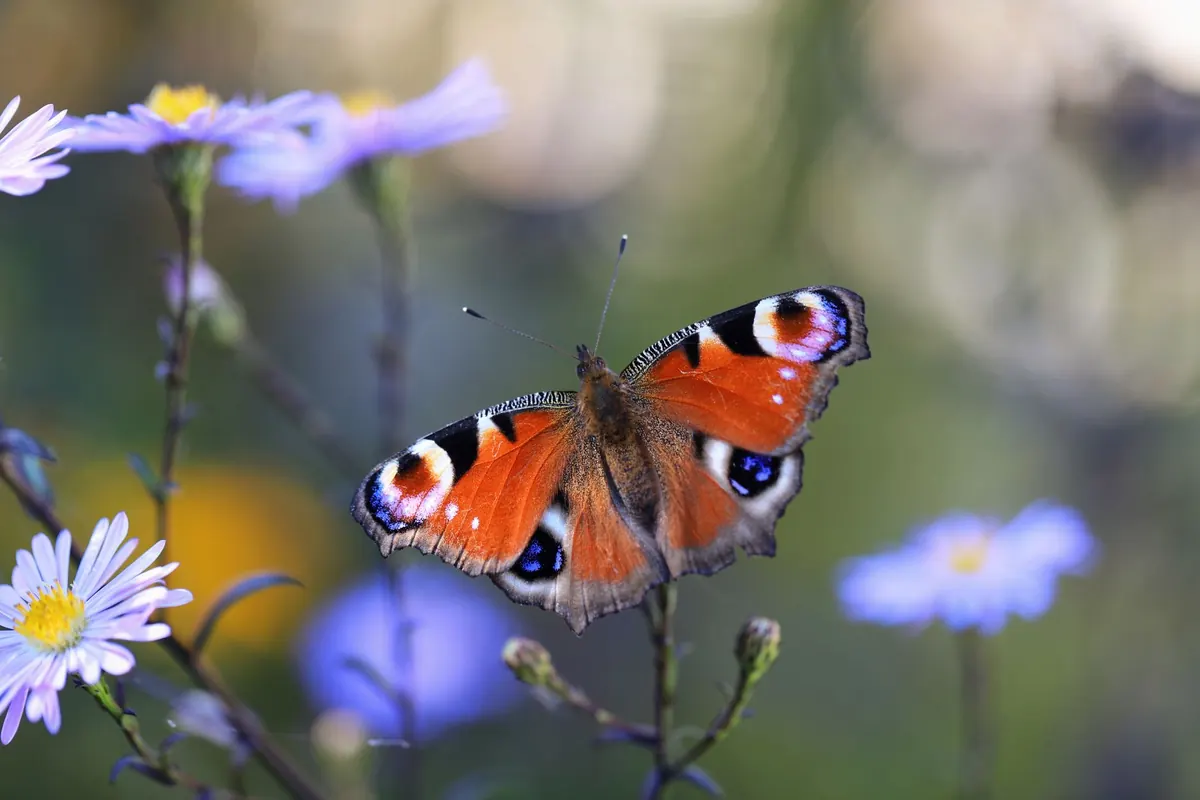
- Verbena bonariensis — airy, see-through stems that need no support and bring in butterflies.
- A small grass such as Stipa tenuissima or Molinia for movement through the winter.
- A structural shrub or two: Choisya, Euonymus, or a hydrangea that flowers on new wood.
- Bulbs — alliums for late spring, daffodils and snowdrops for the months when nothing else is happening.
What to leave for year two
- Annuals raised from seed, unless you genuinely enjoy pricking out seedlings on a windowsill.
- Anything described as needing regular staking, spraying or feeding.
- Spreaders: mint, horseradish, Russian vine, and most things sold as "vigorous".
- Roses, until you know whether you have the time and the tolerance for blackspot.
A season-by-season plan for year one
Late winter and early spring
- Finish clearing and improving the ground.
- Spread a 5cm mulch of compost or bark over the whole border.
- Plant your main perennials and shrubs, spacing them according to the label rather than your optimism.
- Water everything in, even if rain is forecast for tomorrow.
Late spring and summer
- Water new plants properly for their first season — a slow soak twice a week beats a daily sprinkle.
- Do ten minutes of weeding a week. Little and often is the entire secret.
- Cut back spent flower stems on repeat bloomers to trigger a second flush.
- Top up the mulch wherever bare soil appears; bare soil grows weeds.
Autumn and winter
- Leave seedheads and grasses standing, for the birds and for structure.
- Cut back anything that has collapsed, but wait until late winter if you can.
- Plant bulbs in October and November.
- Take photographs of what worked and what did not.
The jobs that genuinely matter
- Watering in the first year. After that, most established borders need almost none.
- Mulching once a year. It suppresses weeds, feeds the soil and holds moisture.
- Weeding little and often. Ten minutes weekly beats a whole lost day in June.
- Cutting back at the right time. Usually late winter rather than autumn.
Everything else — the fortnightly feeding, the spraying, the deadheading of every single bloom, the ritual digging over of bare soil — is optional, and in a low-maintenance border it is usually counterproductive. Freshly dug soil is a seedbed. Leave it alone and let the plants close over it.
What year one actually looks like
Perennials sleep, then creep, then leap. In the first year almost nothing happens above ground because the roots are busy underground. The second year the border fills out. The third year you will wonder why you ever worried. Expect gaps in August, expect a few plants to sulk, and expect at least one to die. That is not failure; that is information.
Take a photograph from the same spot on the first of every month. It is the single most useful gardening record you can keep, and next February it will tell you more about your border than any book.
By the end of your first year you will have a border that stands up on its own for most of the season, a soil that is better than when you started, and a short list of things you would do differently. That is a good year's gardening.
Photo: Jonathan Cooper / Pexels
You Might Also Like
Leaf mould, compost and bark chips each suit different borders. Here's how they compare on cost, looks and soil life, and which to use where.
Two free at-home tests, a jar sedimentation test and a hand-rolling test, that reveal whether your soil is clay, silt, sand or loam before you plant.