How to Overseed a Thin Lawn in Early Autumn
A thin lawn rarely fixes itself. Once grass wears down to bare soil — along a path, under a washing line, where the dog turns — moss moves in and the bare patches spread. Early autumn is the best chance you'll get to put it right. The soil is still warm from summer, the nights are cool and damp, and there are weeks of growing weather left before the first frosts. Sow in September and the new grass will have time to root, tiller and thicken before winter slows everything down.
Why early autumn suits grass seed
Grass seed needs three things: warmth, moisture and contact with soil. September delivers all three in a way that spring rarely matches. The ground holds the heat it built up over summer, so germination is quick, and autumn rain does most of the watering for you. There's also less competition. Annual weeds are winding down, and the lawn isn't putting on the rush of growth it does in May, which means seedlings aren't shaded out or crowded by existing grass.
Timing matters more than most people expect. Sow too late — late October in most of the UK — and the seed may germinate but not establish enough root before the cold arrives. The result is thin, weak plants that struggle through winter. Aim for the first half of September if you can, or early October at the latest in milder parts of the country.
Step one: mow low and scarify
Before any seed goes down, the existing lawn needs to be opened up so seed can reach the soil. Start by mowing on a low setting — lower than usual, but not so low that you scalp the crown of the grass. Then scarify.
Scarifying means raking out the layer of dead grass, moss and debris that builds up at the base of the lawn. That layer, known as thatch, stops seed from making contact with soil and keeps moisture from reaching the roots. You can do it by hand with a spring-tine rake on a small lawn, or with an electric or petrol scarifier on anything larger. Work in two directions — north to south, then east to west — and be prepared for a lot of debris. It's worth the mess. Rake it all up and put it on the compost heap.
If your lawn is very thin
A heavily thatched lawn may need two passes, and you might want to leave a week between them so the grass isn't stressed all at once. If the lawn is more moss than grass, scarify hard and think about whether shade or drainage is the underlying problem. Seed will struggle in the same conditions that killed the grass in the first place.
Step two: improve the soil
Seed establishes best in open, crumbly soil, so while everything is bare it's worth improving conditions. Two jobs matter most:
- Aerate. Push a garden fork into the soil to a depth of about 10cm, spacing the holes around 10–15cm apart. On compacted ground, hire a hollow-tine aerator for the day — it removes small plugs of soil rather than just poking holes, which relieves compaction properly.
- Top dress. Spread a thin layer of sandy loam or a proprietary lawn top dressing over the surface and work it into the holes with the back of a rake. Keep it light — a few millimetres at a time. Smothering existing grass with too much material does more harm than good.
If the soil is dry, water it the day before sowing. Seed sown into dust will sit there and do nothing.
Step three: choose the right seed
Buy fresh seed from a reputable supplier, and match it to how you use the lawn. Most British gardens are best served by a mix of perennial ryegrass and finer fescues. Ryegrass germinates fast, wears well and copes with foot traffic. Fescues are finer, more drought-tolerant and happier in shade. A blend gives you the strengths of both.
Check the sowing rate on the packet. For overseeding, you generally want roughly half the rate recommended for a brand-new lawn, since you're filling gaps rather than starting from scratch. Fresh seed matters more than the brand — old seed in a damp shed germinates poorly.
Step four: sow evenly and work it in
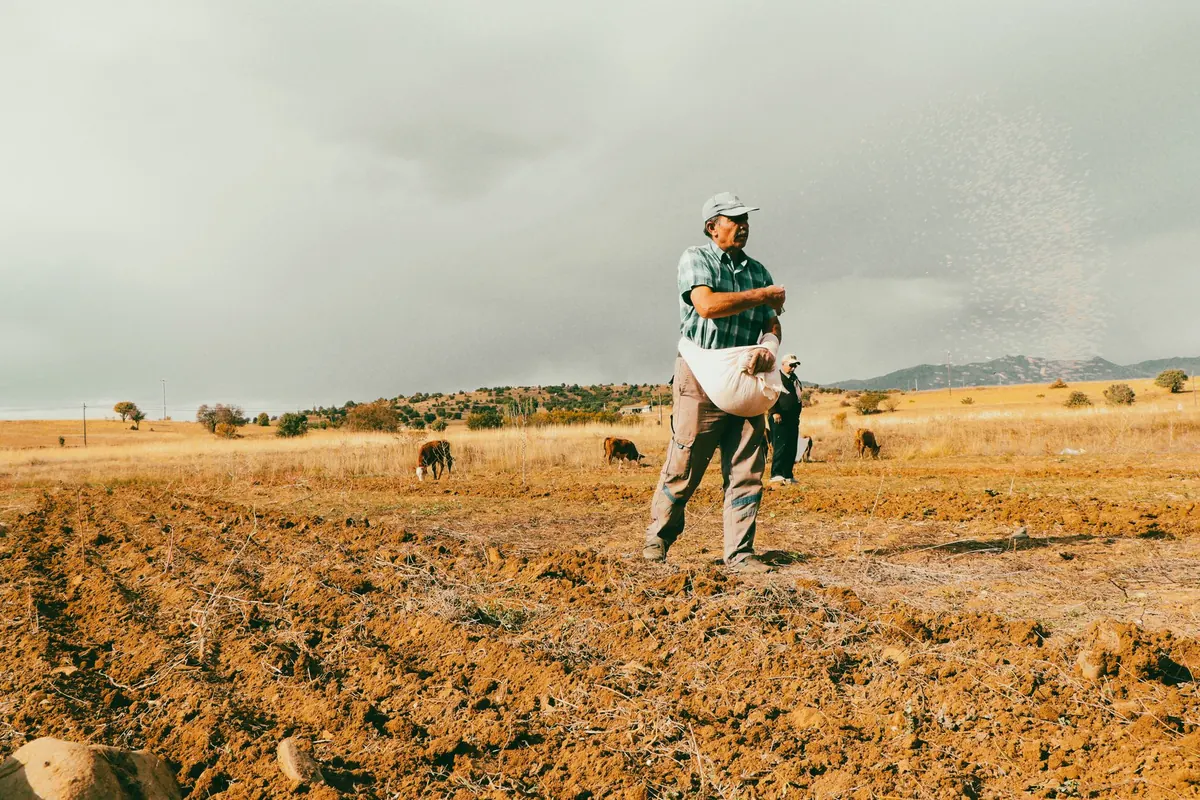
The trick to overseeding is even coverage, not heavy coverage. Scatter half the seed walking in one direction, then the other half walking at right angles. That crosshatch pattern is easier to keep even than trying to judge it in one pass. For small areas, a hand-held spreader gives better results than broadcasting by hand.
Once the seed is down, lightly rake the surface so it settles into the top few millimetres of soil. You don't want it buried — just nestled in. A light roll or a firm treading with flat feet helps ensure seed-to-soil contact, which is the single most important factor in whether it germinates.
Step five: water and protect
New seed needs consistent moisture for the first few weeks. If the weather is dry, water lightly every day or two, keeping the surface damp but not soaked. Once the seedlings are up and growing, switch to deeper, less frequent watering so roots go down after moisture.
Birds can strip a patch of seed in an afternoon. If that's a problem in your garden, drape netting or fleece over the sown areas until the grass is a few centimetres tall. Keep foot traffic off the patches while they establish.
Aftercare: the first cut and beyond
Don't mow until the new grass is roughly 5–6cm tall and clearly growing. When you do, set the mower high and take off only a little — a fifth of the height at most. Young plants are easily pulled up by a blunt blade or an aggressive cut.
Leave the new grass to establish through autumn. Don't apply a weedkiller until the following spring, and don't walk on the patches more than you need to. By next spring the seeded areas should blend into the rest of the lawn. If a few patches still look thin, a light overseed the following September will finish the job.
Photo: Beyza Yalçın / Pexels

You Might Also Like
A season-by-season plan for new gardeners: prepare one border properly, choose reliable plants, and do only the jobs that actually keep it looking good.
Leaf mould, compost and bark chips each suit different borders. Here's how they compare on cost, looks and soil life, and which to use where.