Moss in a UK Lawn: Why It Appears and How to Remove It Without Chemicals
A lawn that stays green through the wettest weeks of winter can look reassuring from an upstairs window. Get closer and the truth shows up: a spongy, springy carpet of moss with a few strands of grass poking through it.
Moss is not a disease, and it is not a sign that you have done something terribly wrong. It is simply better than grass at coping with the conditions your lawn is in. Deal with those conditions and the moss shrinks on its own. Reach for a chemical moss killer and you will get a brown patch, a rake-full of dead moss, and the same problem again next winter.
Why Moss Wins
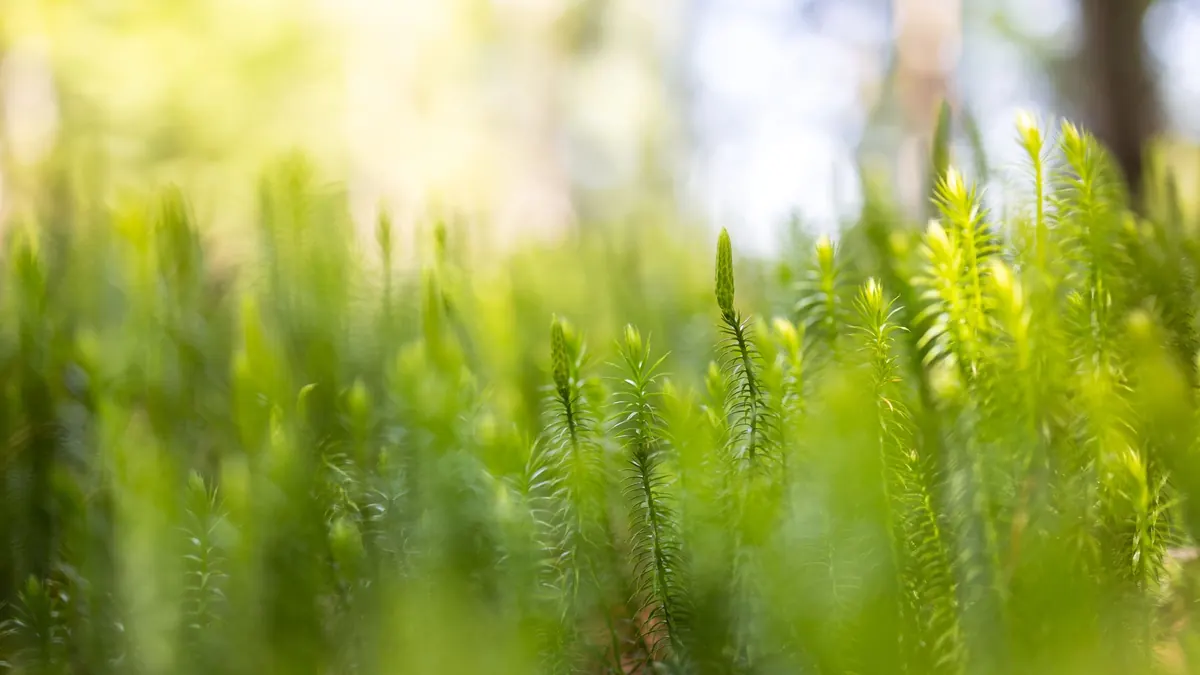
Grass is a demanding plant. It wants light, air moving through the soil, decent drainage and a steady supply of nutrients. Moss wants almost nothing. It has no proper root system, so it takes water and nutrients straight through its leaves, and it will happily grow on compacted clay, in deep shade, on a thin layer of soil over rubble, or in a corner where water sits for days.
That difference is the whole story. Moss is not taking over a healthy lawn; it is filling a gap the grass has left. Spores blow in constantly, and fragments broken off by the mower or by foot traffic can take hold within weeks.
Three Problems That Let Moss In
Shade
Grass needs a good few hours of direct sun during the growing season to thicken up. If a fence, hedge, shed or tree shades the same patch all day, the grass thins, the soil stays damp and moss moves in. North-facing lawns and narrow side returns between buildings are the usual victims.
Poor drainage
If the lawn squelches underfoot in February, or puddles sit for a day after rain, moss will find it far more comfortable than grass. Heavy clay, compacted subsoil, a high water table or a garden sloping towards the house all keep the top layer wet.
Compaction
Every trip across a wet lawn squeezes air out of the soil. The same paths get walked, the same corner gets stood on while you prune, children play in the same spot. Compacted soil has no room for grass roots, or for the worms that keep it open. Moss does not mind in the least.
Before doing anything, walk the lawn after rain and note a few things:
- Where moss grows thickest — under trees, along a fence, on a worn path?
- Whether your feet sink or water pools in those spots.
- How much direct sun each area gets in midsummer.
- How low you have been cutting, and whether the mower blade is sharp.
Moss is the symptom. The soil, the light and the mowing height are the cause.
Removing Moss Without Chemicals
Ignore the old kitchen-cupboard remedies. Bleach, washing-up liquid and washing powder do not fix moss, and they damage soil life and scorch the grass around it. The mechanical approach takes longer but leaves the lawn in better shape.
- Mow first, but not scalped. Set the blade a notch or two lower than usual and collect the clippings.
- Scarify. Use a spring-tine rake on small lawns or a mechanical scarifier on anything larger. Work in two directions, at right angles, so the tines pull moss and dead thatch out rather than flattening it.
- Clear the debris. Rake it up and add it to the compost heap in thin layers, or use it to line a hanging basket. Left lying on the lawn, it smothers what grass remains.
- Work in stages if the moss is thick. One brutal session can leave you with more mud than grass. Scarify, let it recover a few weeks, then go over it again.
- Small patches? Use a hand fork. Lift the moss in clumps, tease out the worst of it and firm the soil back down.
Timing matters. Do this in early autumn or spring, when the grass is growing strongly and the soil is neither bone dry nor frozen. A lawn scarified in a July drought or a January frost will struggle to recover.
Fixing the Conditions
Aerate and top dress
Spike compacted areas with a garden fork pushed in to the full depth of the tines and levered gently back and forth, working along a grid. For a bigger job, hire a hollow-tine aerator, which removes small plugs of soil and leaves channels for air and water. Brush a sandy top dressing into the holes afterwards.
Feed, overseed and mow higher
Grass that is fed and thick will crowd moss out. A balanced spring feed and a later-season feed help, and overseeding bare patches with shade-tolerant fine fescues or browntop bent gives you something that can compete. Raise the cut to around 30–40mm in summer and keep the blades sharp. Short, blunt mowing weakens grass and lets light reach the soil, which is exactly what moss wants.
Let in light and air
Prune back overhanging shrubs, thin dense hedges and lift the lower branches of trees where you can. Check whether any tree is protected before you start cutting. Better airflow also helps the surface dry after rain.
Sort out drainage
If water genuinely sits, a French drain or a gravel-filled soakaway may be needed. On a smaller scale, hollow-tining twice a year and keeping the surface open makes a real difference.
Check the pH
Moss tolerates acid soil better than most lawn grasses do. A cheap soil test kit will tell you where you stand. If the soil is genuinely acidic, a lime dressing helps the grass — but lime does not kill moss, and liming soil that does not need it causes its own problems, so test first.
A Simple Year-Round Routine
- Spring: scarify if you did not do it in autumn, aerate worn areas, feed and overseed thin patches.
- Summer: mow little and often at 30–40mm, and water deeply once a week in dry spells rather than sprinkling daily.
- Autumn: the main scarify-and-overseed window, plus another pass with the fork on compacted ground.
- Winter: stay off the lawn when it is wet, keep the mower off it in frost, and clear fallen leaves so light and air reach the grass.
Start With the Soil, Not the Moss
If you rake moss out and change nothing else, it will be back by the following winter. Spend an afternoon on the causes instead: open up the soil, let in more light, feed what grass you have and cut it a little longer. Progress is slow, but it holds.
And be realistic. A deeply shaded strip under a mature hedge may never grow good grass, whatever you
Photo: Marek Piwnicki / Pexels

You Might Also Like
A season-by-season plan for new gardeners: prepare one border properly, choose reliable plants, and do only the jobs that actually keep it looking good.
Leaf mould, compost and bark chips each suit different borders. Here's how they compare on cost, looks and soil life, and which to use where.