Slot Volatility, RTP, and the Math Most Players Ignore
Three spins into a bonus round, the reels stall on two scatters, and you mutter the same sentence every player has muttered: “This machine is due.” It isn't. That's the hard truth the casino industry spends billions keeping soft. But while the outcome of any single spin is pure chance, the machinery behind that chance is fully documented, mathematically precise, and legally published. Once you understand a few numbers, you stop playing hunches and start playing smart.
RTP: The Number On Every Certification Sheet
Return to Player (RTP) is the percentage of all wagered money a game is designed to pay back over millions of spins. A slot at 96% RTP keeps 4% as house edge, on average and in the very long run. That's it. It says nothing about your session tonight.
Typical ranges worth memorizing:
- Online video slots: 94%–97%, with big-name titles like Blood Suckers or 1429 Uncharted Seas sitting above 97%
- Jackpot/progressive slots: as low as 88%–92%, because a slice of every bet funds the prize pool
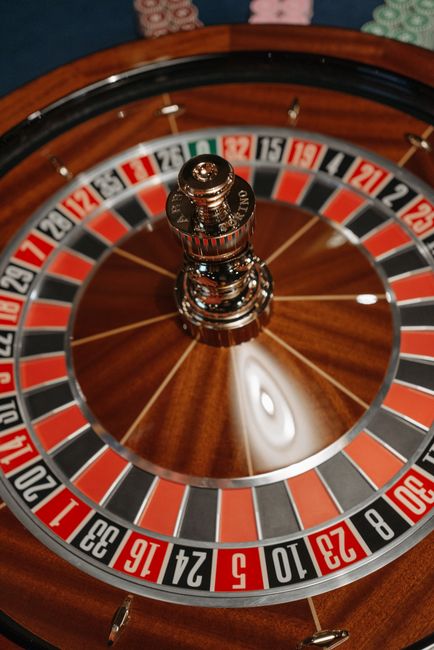
- European roulette: 97.3%
- Blackjack with basic strategy: 99.5%+
- American roulette: 94.7% — the double zero costs you 2.6 percentage points versus the European wheel
Two slots with identical themes and near-identical math can differ by several points. Over 10,000 spins at $1 each, the difference between 94% and 96.5% is $250 of expected loss. That's a flight to Lisbon you're feeding into the machine.
Volatility: The Setting That Decides Your Night
High RTP does not mean a pleasant session. Volatility (sometimes called variance) describes how the wins are distributed. Low-volatility games pay small amounts often. High-volatility games can go 300 spins without a meaningful hit, then hand you 800x in a single drop.
This is why two players on the same slot have wildly different stories. A $100 bankroll on a high-volatility slot at $1 spins might die in 20 minutes. The same $100 on a low-volatility slot at $0.20 spins can last two hours. Neither is “luckier.” They're just sitting in different variance regimes.
Practical rule: your bankroll should be at least 200x your spin size for high-volatility play, and 100x for low. If you're depositing $50, don't spin $2 on a Megaways monster. You're not gambling, you're paying tuition.
Bonus Buys and Max Win Caps: Read the Fine Print
Bonus buy features have exploded across slots, letting players pay 80x–400x their stake for immediate access to free spins. Sounds clean. It usually isn't.
Before you buy, check three things:
- The advertised RTP of the bonus buy, not the base game. Many providers lower it — sometimes to 94% or below.
- The max win cap. A slot may advertise “10,000x max win,” but the bonus buy might be capped at 2,000x.
- Whether the feature is triggerable organically at all, or if the RTP was re-engineered assuming most players will buy
Max win caps are the quiet story of modern slots. Pragmatic Play, Hacksaw, and NoLimit City all publish caps — 5,000x, 10,000x, even 50,000x on games like San Quentin. That's not a marketing flex; it's the mathematical ceiling on variance. If the theoretical max is 50,000x, the game must be built to never exceed it, which shapes every paytable decision behind the scenes. More background can be found at slot dana.
Poker Is the Opposite Game — and That's the Point
Everything above is about games where you can't influence the odds. Poker is the exception in the iGaming universe: a game of skill wrapped in gambling math.
In no-limit Texas Hold'em, you're not playing the deck. You're playing the other players' ranges. A tight-aggressive player opens under the gun with roughly 12%–15% of hands. A loose-passive player on the button might call with 60%. That asymmetry is the entire edge. Unlike slots, the house takes a fixed rake (often 5% capped at $3 online) and steps out of the way. Your win rate is determined by how badly your opponents construct those ranges.
Which means the same skills that improve your poker win rate — bankroll management, understanding variance, avoiding tilt — directly improve your slot experience too. The game is different. The discipline is identical.
Bankroll Math That Actually Works
Forget “only gamble what you can afford to lose.” That's table stakes. Here's the sharper version:
- Separate your bankroll into a dedicated account you can reload monthly, weekly, or quarterly
- Set a session stop-loss at 30% of that bankroll. Hit it, close the app.
- Set a win-stop too — usually 50%–100% of your session buy-in. Locking profits is the only reliable edge a casual player has
- Track spins, not dollars on slots. 500 spins at $0.40 is a session. 500 spins at $4 is a lifestyle change.
The players who last years in this space aren't the ones with the best “system.” They're the ones who treat the math as the boundary of the playground, not the obstacle to defeat.
Where the Industry Is Actually Heading
Three shifts are worth watching over the next 24 months. First, provably fair mechanics — cryptographic hashes that let you verify a spin was never tampered with — are moving from crypto casinos into mainstream platforms. Second, jurisdictions like the UK and Sweden are pushing for slot stake limits (as low as $2–$5 per spin), which will punish high-volatility design. Third, AI-driven personalization is being regulated heavily in Europe, because a system that learns your tilt pattern and offers you a “win-back” bonus at 2 a.m. is not a feature, it's a trap.
None of this makes the games less fun. It just rewards players who pay attention. That's a smaller club than the marketing suggests, and admission costs nothing but a willingness to read the numbers.
So next time a slot stalls on two scatters and you feel the pull of “it's due,” remember: it's never due. It's just a random number generator doing exactly what it was coded to do. Your job isn't to predict the machine. It's to know exactly what you're buying, how long your money lasts, and when to walk. That's the only strategy in this industry that survives contact with reality.

You Might Also Like
A season-by-season plan for new gardeners: prepare one border properly, choose reliable plants, and do only the jobs that actually keep it looking good.
Leaf mould, compost and bark chips each suit different borders. Here's how they compare on cost, looks and soil life, and which to use where.